The Cleaning Fee War Is Exhausting Hosts
Guests hate cleaning fees, cleaners cost more every year, and somehow I am the bad guy.
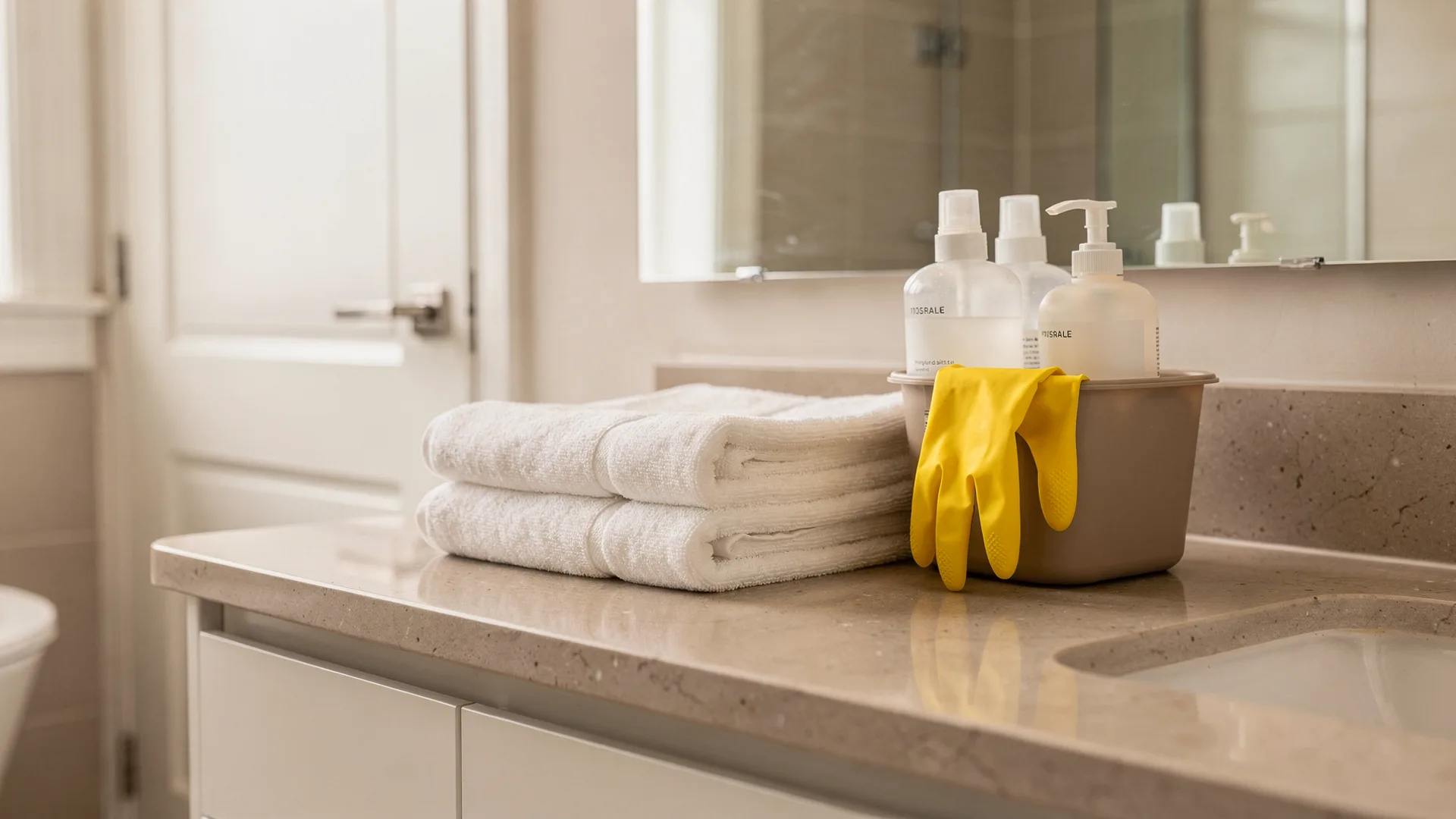
The cleaner wants a fair rate, the guest hates cleaning fees, Airbnb displays the total like a crime scene, and somehow you are the villain. You can hold the entire absurd standoff in two browser tabs. Tab one: the invoice from your cleaner — $95, itemized, twelve dollars higher than it was eighteen months ago, for a same-day flip between a checkout and a check-in six hours apart. Tab two: a four-star review, otherwise glowing, with one line at the bottom about how the cleaning fee 'felt like a scam.' A scam. For a number that does not even fully cover tab one.
Four stars is almost worse than one, if you're being honest with yourself. A one-star rant you could dismiss as a crank. Four stars means a reasonable person had a genuinely good stay, glanced at the checkout math, and concluded — calmly, fairly, in their own head — that you are running a small racket. And there is nowhere to put that. You can't forward them the invoice. You can't explain that your cleaner has raised rates twice since 2024 and deserved to both times. You absorb the star, restock the towels, and pay tab one again next week.
The enemy is the Invisible Line Item: a real cost that only ever appears to guests as pure margin. The guest is squeezed and blames the fee. The cleaner is squeezed and raises the rate. The platform presents the bundled total at checkout like evidence at trial, with your name attached as the defendant — and the number in the middle, your actual margin, is the only one in the whole transaction that keeps shrinking with nobody to complain to. Guests suspect the cleaning fee is where you hide profit. You know it's where profit goes to die.
There is no move that ends this war outright — cleaning costs what it costs, and that cost is not going back down. But there is a real difference between a fee that reads as a service and a fee that reads as an ambush, and most of that difference sits in decisions you control before a guest ever reaches checkout.
Where the Number Actually Comes From
A cleaning fee isn't arbitrary, even when it feels that way to a guest comparing two nearly identical listings with wildly different charges. It's built from real, itemized costs: a cleaner's hourly rate multiplied by turnover time, laundering costs for linens and towels, restocking consumables, and increasingly, a buffer for same-day turnovers that require paying a premium for speed. In markets where cleaning labor has gotten harder to book reliably, that hourly rate has climbed faster than nightly rates have, which means the fee has been rising even in months where a host hasn't touched their base price at all.
Guests, for their part, are reacting to something real too: a fee that shows up late in the booking flow, disconnected from the nightly rate they compared across listings, often followed by a checkout list that asks them to start washing dishes and stripping beds anyway. From the guest's side, it can genuinely look like paying twice — once in the fee, once in the labor. Both readings are legitimate. Neither side is lying. They're just measuring the same number against completely different baselines.
Two Ways Hosts Try to Fix It, and Why Neither Fully Works
Some hosts fold the cleaning fee into the nightly rate to make the total look cleaner at a glance. This can help conversion, since guests respond well to a price that doesn't grow at checkout, but it also means charging the fee on every night of a stay rather than once per booking, which quietly punishes longer stays and can make a five-night trip look proportionally more expensive than a comparable listing that itemizes separately. Other hosts drop the fee to zero and raise the nightly rate instead, which solves the perception problem but still leaves the same total cost sitting there, just relabeled — a change in packaging, not in economics.
There isn't a version of this that makes the fee disappear or makes every guest comfortable with it — cleaning genuinely costs what it costs, and that cost has only gone up. What actually helps is making the total price legible before a guest ever gets to checkout, so the fee reads as expected rather than as a surprise tacked onto a number they'd already mentally committed to. This is closely tied to the same first-impression problem covered in how guests judge a listing's total value before they've read the fine print — a fee feels like a scam mostly when it arrives as a surprise, not when it's disclosed clearly from the start.
Making the Number Feel Earned, Not Sneaky
The other lever worth pulling is showing guests, briefly, what the fee is actually buying — not a defensive paragraph, just a short, matter-of-fact line in the listing description. Guests who understand a fee is funding a genuinely thorough, professional turnover tend to complain about it less than guests who assume it's pure margin, even when the dollar amount is identical.
It's also worth accepting that a small share of guests will object to any cleaning fee on principle, regardless of how it's presented or what it's funding, and that no amount of transparency will fully satisfy that group. Chasing a zero-complaint outcome on this particular line item is a losing game; the more realistic goal is shrinking the number of guests who feel blindsided, not eliminating disagreement about pricing altogether.
Making cleaning fees feel fair instead of sneaky
- Audit your actual cleaning invoice every six months — most hosts are pricing off a number that's a year or more out of date.
- Display the cleaning fee early in your listing description, not just at checkout, so it's expected rather than discovered.
- Add one short sentence explaining what the fee covers — same-day turnover, linens, restocking — so it reads as a service, not a markup.
- Reconsider asking guests to do pre-checkout chores if you're also charging a full cleaning fee; guests notice the overlap and it's the single fastest way to trigger a fee complaint.
- Test whether folding the fee into the nightly rate helps or hurts your conversion for your specific market, since the answer differs by average length of stay.
- Never let the fee sit unexamined for longer than a year — a fee that hasn't moved while your cleaner's invoice has is quietly eating your margin.
The play that actually works usually isn't lowering the fee. It's moving it higher in the listing description, adding one plain line about the same-day turnover standard it funds, and quietly retiring the pre-checkout chore list. Make those three changes and the next review that mentions cleaning has a real chance of being a compliment about how spotless the place was at check-in — which, invoice aside, was the entire point of the $95 to begin with.
Published May 3, 2026 / 6 min
Related Reading

The Airbnb Fee Problem: Hosts Get Blamed for Prices Guests See
The guest's screen showed $312. The host's payout, for the same reservation, was $247.
April 17, 2026
6 min
The Cost Stack Nobody Told New Airbnb Hosts About
Gross revenue is the number hosts screenshot and send to their brother-in-law. Net profit is the number that actually decides whether hosting was worth it.
April 13, 2026
6 min

I Need This Income
The mortgage is due on the third. The calendar for the third is still open.
April 21, 2026
6 min